
Article
Pricing the next cycle: valuations and exits in the age of AI
AI has broken the benchmarks investors used to price startups. Here’s what that means for UK valuations and exits.
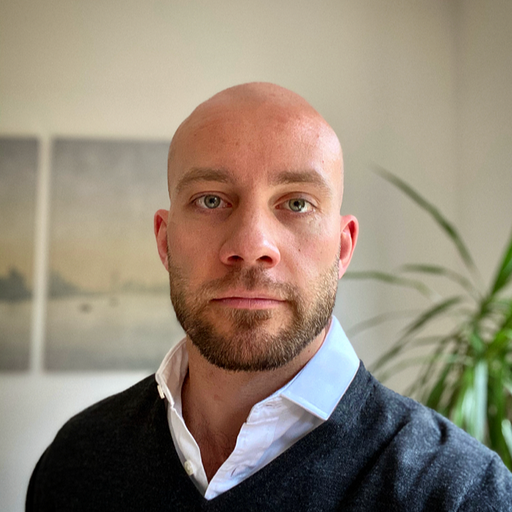
Bradley Jones
September 25, 2026

Brad Jones shares his takeaways from the Early-Stage Northern Showcase 2026 on what’s still broken in early-stage fundraising.
Last week, myself and the ThatRound team travelled to Manchester for the Early-Stage Northern Showcase 2026, delivered by The Growth Company GC Angels and Bruntwood SciTech.
It was a genuinely valuable day. The energy in the room, founders and investors mixing freely, challenging each other, sharing context, was hard to miss. Through panel discussions, reverse investor pitches and informal conversations, there was a lot of honest discussion about what isn’t working in early-stage fundraising, especially in the North.
And throughout the day, one thing became more and more obvious: many of the problems being discussed are structural, and ThatRound sits right at the heart of solving them.
So, here are my main takeaways.
The day opened with an investors’ panel on the challenges and opportunities within the Northern ecosystem, and the discussion was refreshingly open.
Investors spoke openly about the difference in deal flow they see from London versus the rest of the UK. In 2025, London-based companies completed 2,944 equity deals and raised £14.9bn — accounting for half of all UK equity deals and more than 62% of total capital deployed. When looking at VC funding alone, nearly 70% of UK capital is still concentrated in London and the South East.
That imbalance isn’t new. What was encouraging, though, was how the panel framed it. This isn’t about a lack of ambition or quality elsewhere. Many regions are seeing strong volumes of first-time deals, showing founders are building companies at pace. The challenge is that cheque sizes are smaller, and access to larger or follow-on investors becomes harder as those companies look to scale.
When the conversation turned to whether there are “enough quality startups in the North”, Hana Hussain, Investment Director at Big Issue Invest, pushed back, saying that we too often operate with a scarcity mindset when we need an abundance mindset. She’s right. The issue isn’t a shortage of great companies, but the difficulty of getting them in front of investors who are already overwhelmed with opportunities, or with a mindset only focussing on London.
Thousands of impressive startups exist across the UK. But reliance on existing networks and warm introductions still creates barriers, particularly for founders outside established investment circles. Reducing that friction, and improving how founders and investors find each other, is where meaningful progress can be made.
Panelists: Dan Walker, Hana Hussain, Kevin Chong, Stephen Price, Marc Shirman
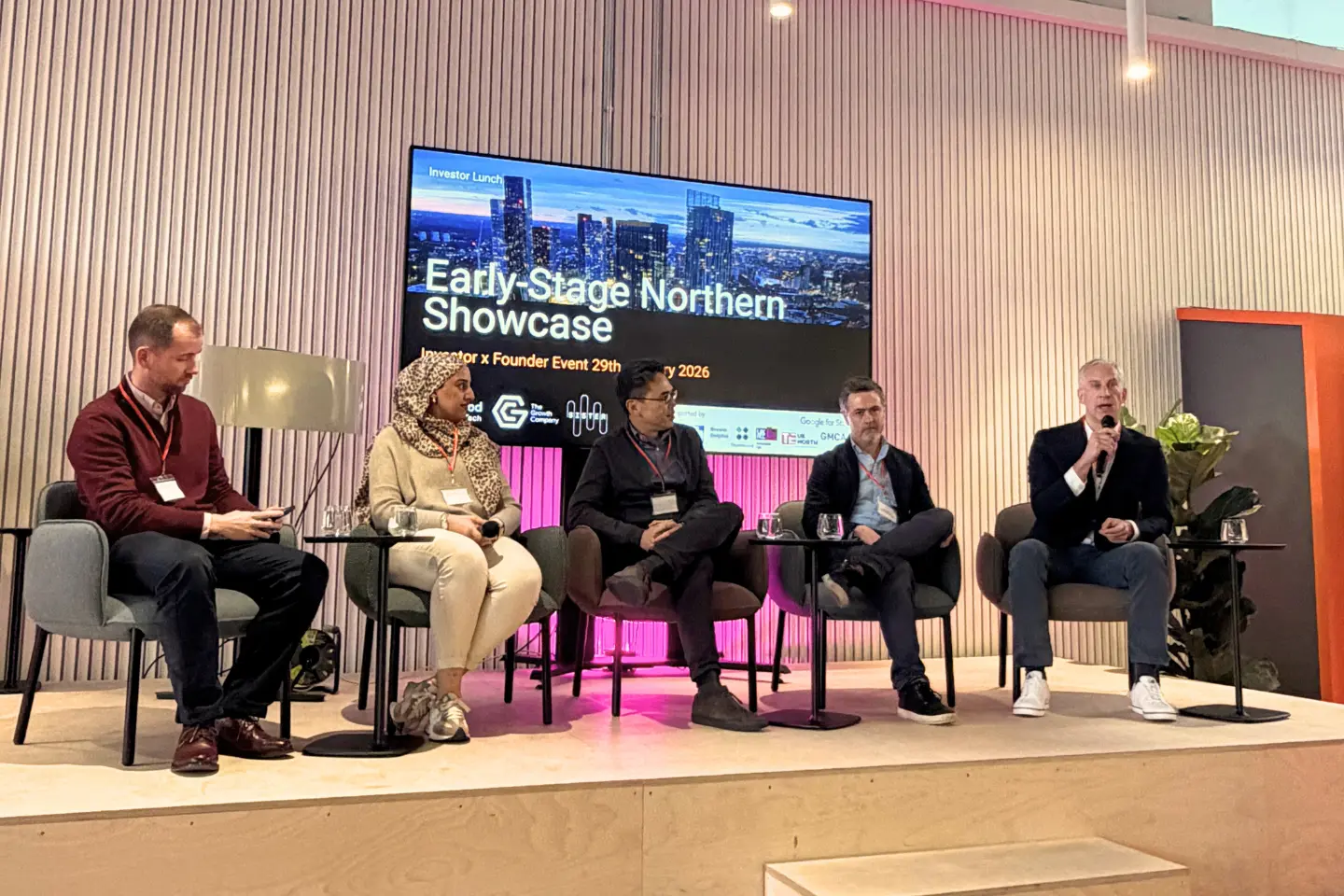
During one of the panels we heard investors speak candidly about how they handle inbound from founders.
Some investors said they make a genuine effort to read every message they receive. Others admitted they’re completely overwhelmed and simply can’t keep up. One VC shared that they receive around 3,000 decks a year, of which only four or five lead to an investment. That’s roughly a one-in-600 chance for a founder who manages to get in front of them.
The wider data supports this. In 2025, nearly 2,500 companies raised equity for the first time, a year-on-year increase of more than 23%. More founders than ever are entering the fundraising market, which we love to see! But at the same time, total equity deals fell by nearly 8%, meaning more competition for fewer funded outcomes.
Several investors described a familiar frustration: getting on calls triggered by cold outreach, only to quickly realise that the founder was a complete mismatch. Often it was obvious the message had been bulk-sent, with little understanding of the investor’s thesis. Over time, that builds frustration and erodes trust on both sides. Founders waste time chasing the wrong people, and investors spend time filtering rather than evaluating.
Panelists: Gordon Bateman, Bradley Jones, Dan Dudley, Brad Scott, Matt Boreman, Johnny McNamara
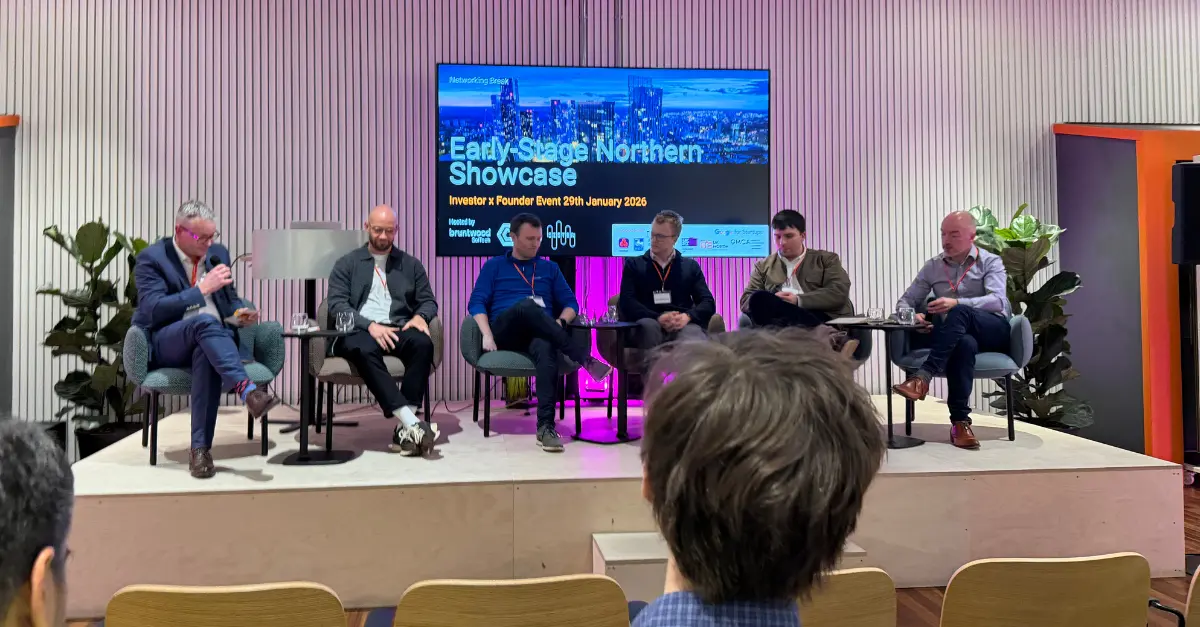
Christopher Kenna raised a point during a discussion, that it’s not as simple as just getting a foot in the door, as founders need to know that door exists in the first place. Deals can often still be prioritised through personal networks, warm introductions and familiarity, which makes the market feel closed from the outside.
The reverse investor pitches brought this to life. Eight different funds and syndicates stood up and explained their investment thesis, what they look for and what they don’t. (Shout out to Harrison Faull for representing Aligned Syndicate.)
Sitting in the front row, I noticed a founder with a huge Excel spreadsheet open, capturing as much information as she could during the three-minute pitches. Every syndicate went into the sheet. Without being in that room, there’s a good chance she wouldn’t have discovered many of them at all.
What struck me was how familiar the situation felt. This is the kind of work founders are routinely forced to do — manually piecing together the early-stage investor market just to understand who’s out there. On ThatRound, that groundwork has already been done. Having a single place to see those investors, understand their focus, and assess fit means founders can spend less time compiling spreadsheets and more time having the right conversations.
Investor pitches: Mateusz Portka, Ben Davies, James Reston, Harrison Faull, Haadi Shaikh, Kevin Chong, Ted Tavendale, Zayn Sulaman

At one point, Haadi Shaikh asked a question along the lines of: why hasn’t anyone built a platform that properly solves this problem… and wouldn’t AI be well suited to matching startups and investors?
That hit the nail on the head. And at that moment, it felt important to say plainly that this does exist, and that’s exactly what we’ve built!
Later, when I was speaking on a panel alongside other investors, I asked them a simple question: what actually builds trust for you? The answers contained relevance, quality deal flow, and seeing that quality delivered over time.
So I followed up by asking whether they could imagine trusting AI to help deliver that. The answer, across the panel, was yes.
This is where the real opportunity sits. Using AI, a startup’s pitch deck can be turned into a clear, standardised pitch page that surfaces the information investors actually care about, in a format that’s easy to digest and compare. Crucially, that picture isn’t built on documents alone. The nuance comes from conversations we have with startups and investors, which are then structured to create a fuller and more consistent view of the business.
From there, startups can be matched with relevant investors based on real investment theses and more granular requirements, the kind that don’t always show up in hard data fields. The result is a cleaner, more efficient way for founders and investors to find each other, with far less friction on both sides.
.webp)
There were real positives to take from the day. Events like the Early-Stage Northern Showcase matter. You don’t replicate that energy, context and trust-building through email or LinkedIn.
But the conversations were honest. There is still regional disparity in access to capital. Founders are still required to do an enormous amount of invisible work just to get in front of investors. Investors are still flooded with decks and messages, many of which were never a fit to begin with. And in too many cases, only one in hundreds of pitches ever turns into funding.
Founders feel the grind. Investors feel the noise. And both sides know the system can work better. And that’s exactly why we’re building ThatRound.

AI Index Report 2026 - Startup Coalition
The Deal 2026 - Beauhurst x Mercia Ventures
One place to find, compare and engage with the right early-stage investors by using intelligent matching and warm introductions.


.png)