
Blog
Introducing our improved startup fundraising platform
We've updated ThatRound so founders and investors can see how well they fit each other, and why.
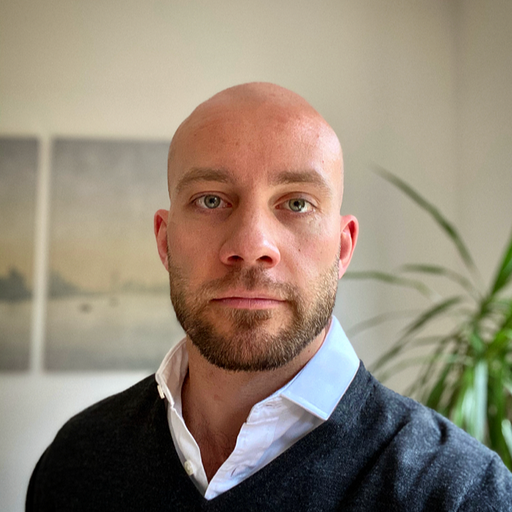
Bradley Jones
October 2, 2026

What we've learnt in our first year building the infrastructure for early stage founders to raise investment.
2025 has been a pivotal year – both for me personally and for ThatRound.
Since launching our beta in March, we’ve had a front-row seat to how early-stage fundraising actually works in the UK today. Not how it’s supposed to work, or how it’s often talked about, but how it really plays out for founders and investors on the ground.
We’ve seen what’s broken, what’s improving, and what founders consistently underestimate when they start a raise.
Like many startups, once we were live and spending real time with founders and investors – watching how they used the product, where they got stuck, and what they wanted more of – we realised the shape of our ambition was changing.
What started as a simple way to improve access has evolved into something more ambitious: infrastructure that helps founders and investors cut through noise, focus on fit, and move faster with confidence.
Our mission now is clear. We’re building the infrastructure for early-stage funding in the UK. These are the lessons from our first year that will shape what we build next.
The fastest fundraising round we’ve seen through ThatRound closed in six weeks, start to finish. £500k raised.
What matters most is what didn’t happen.
There was no massive inbound brand. No 200-investor spreadsheet. No endless “just checking in” follow-ups. What there was was clarity – on the company, on the ask, and on who it actually made sense to speak to.
That first deal, Hartley Ultrafast, proved the use case. Not just for us, but for the founder. Less noise, fewer dead ends, faster decisions.
Since March:
None of that comes from founders “hustling harder” or sending more cold outreach. It comes from direction and reduced friction:
One of the most underrated insights we’ve heard from founders is that fast “no’s” are a gift. Since launch, we’ve delivered feedback on 100% of declined investment applications. A clear rejection, with context, saves weeks of uncertainty and helps founders iterate properly. Silence helps no one.
If you want to move faster, don’t start with more outreach – start with clearer positioning and fewer, better conversations.
A lot of early-stage fundraising advice still assumes warm intros are the critical piece of the puzzle. In practice, they do matter – but only where there’s genuine fit.
A warm intro to the wrong investor is still the wrong investor. It just fails more politely.
Strong companies exist across the UK, across sectors and backgrounds. But because of proximity – regional or otherwise – or because they’re not “already in the room”, founders often get introductions where there simply isn’t appetite or conviction for what they’re building.
Fixing this isn’t about more networking. It’s about extracting and communicating the real value of a startup in a way investors understand, and standardising how fit is assessed on both sides.
So far, that approach has resulted in:
The goal isn’t volume, it’s relevance. When founders and investors start conversations already aligned on stage, sector and expectations, everything moves faster.
Early-stage fundraising is full of hidden rules. Founders are often expected to navigate fees, processes, timelines and expectations without clear information.
From day one, we’ve pushed for transparency – not because it sounds good, but because it reduces stress and prevents bad decisions under pressure - something I know from my own personal experience raising.
Founders consistently want clarity on:
As a result:
Transparency matters just as much for partners. Investors want signal, not volume. So far:
Good investors stick around when deal flow is structured, filtered and honest. Transparency works both ways – it saves founders time and protects partners’ attention.
One thing that’s become very clear this year is that fundraising is still isolating, even for experienced founders. The hardest part isn’t rejection. It’s ambiguity. Not knowing if you’re close or miles off. Not knowing if silence means “no” or “later”. Not knowing what’s normal.
Being able to see this response time is typical, or this feedback is fixable, or this isn’t about you can completely change how a founder approaches their next step.
One problem I was determined to solve with ThatRound was the lack of a real feedback loop in fundraising. Since March, we’ve delivered feedback on 100% of rejected applications. That feedback is a critical part of becoming genuine infrastructure for early-stage funding.
One of the strongest signals we’ve seen isn’t a metric – it’s word of mouth.
We’ve spent very little on marketing while refining our proposition. Founders come to us because they’ve heard someone:
That tells me the problem we’re solving is real, and that we have the right momentum heading into 2026.
On a personal note, one of the highlights of 2025 was Matt joining as co-founder, and now building a team that share our vision. Building a company like this isn’t a solo sport.
From starting alone, to finding a co-founder, to growing to a team of eight – soon nine – the focus now is simple: helping more founders raise with clarity, confidence and momentum in 2026.
One place to find, compare and engage with the right early-stage investors by using intelligent matching and warm introductions.