.png)

Blog
How startups raising on ThatRound can secure top-tier media coverage
You don’t need to be a big brand to get national coverage. Jon Card, who’s written for The Times and Guardian, explains how.
October 13, 2026

For a deep tech founder, the pool of investors who understand what you’re building is small. Brendan Cornthwaite explains.
Universal Atmosphere Processing is developing a new way to extract valuable noble gases directly from the air. Neon supports the lasers used in semiconductor manufacturing, xenon is used in electric satellite propulsion, and krypton improves the insulation of high-performance glazing.
Today, their supply is tied to large plants built primarily to supply oxygen, not to meet demand for noble gases. UAP’s Atmospheric Processor® uses plasma-based electromagnetic separation and is designed to break that link, allowing new supply capacity to be built around the industries that need it.
"These gases are used in advanced manufacturing processes, particularly semiconductor, aerospace and defence. We see AI driving the market because of chip manufacturing, and then aerospace, particularly the space industry. These gases are used in space propulsion, particularly satellite positioning propulsion."
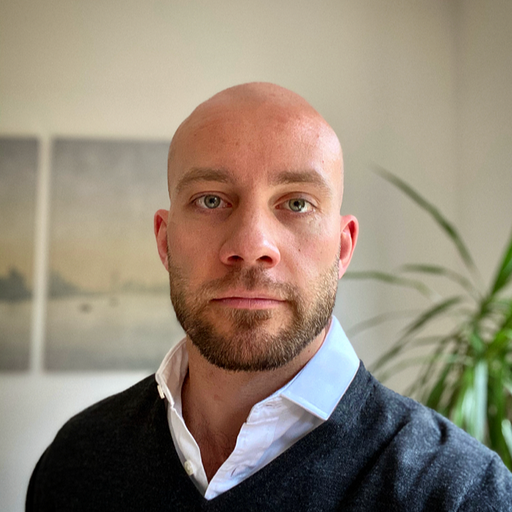
For founder and CEO Brendan Cornthwaite, the challenge was finding the small number of investors who could look at a hardware roadmap and understand why it takes as long as it does.
Having raised a pre-seed in summer 2025 from a Northwest angel group and a regional VC via its accelerator, the next hurdle was one most hardware companies hit.
"When you're developing hardware like we're doing, and it's a new technology as well, it's very hard to estimate how much you're going to need exactly."
So he went looking for a top-up. A bridge, a pre-seed plus, whichever name you prefer. Enough to keep the team funded to the end of the year and finish the Mark 1 prototype unit.
This wasn't a start from zero, the pre-seed had already given real momentum. What was missing was an obvious next set of people to talk to. "I've tried a few other platforms in the past, with varying results. We've had plenty of meetings, but nothing's come off the back of them."
Brendan had seen ThatRound around the Northwest startup scene and at various events, but what prompted him to sign up was looking at the platform itself.
"Especially as a startup founder, you want something that's intuitive, that you're not going to spend a lot of time on, and that also presents your information professionally. That's what seemed to come across."
The part of the setup he singled out was the review before anything goes live.
"One of the things I liked about the process is that you get personal feedback on how to improve the pitch page before it goes live to the investor members."
It didn't change what UAP does or how they'd describe it, and he's clear about that. What it changed though was the presentation, shaped by what ThatRound's investor members are actually looking for.
Brendan is realistic about the size of the pool for a company like his, and he thinks other hardware founders should be too.
"For us, and this is the same with all deep tech or hardware startups, you're only going to attract certain groups. Whether that's particular VCs or angel groups that actually invest in that. You have to understand that as a starting boundary going into it."
That's the honest version of what a matching platform can do for a deep tech founder. It can't manufacture investors who don't exist, but it can shorten the part where you work out who they are.
"We connected very quickly with the people that would be interested. Some of them didn't work out, and that's understandable, but the ones that did moved through quickly."
Two syndicate conversations came out of it. One didn't go further; the other was Cambridge Capital Group.
Cambridge Capital Group invited Brendan down to pitch to their members in person, around two dozen people in the room.
"It was a really good experience, very professional. They were very receptive, very understanding. You can tell they're an experienced group. Cambridge Capital Group were really understanding of the road map, and that's what made the difference.
That view came from both sides of the table.
"UAP is a blue sky opportunity but with a potentially huge prize and led by an experienced industry founder."
— Struan McDougall, Director, Cambridge Capital Group
Several Cambridge Capital Group members invested, one of them has kept topping up since, and Brendan is going back to pitch the group again for the seed.
Building on the pre-seed funding already in place, this round helped UAP complete the Mark 1 prototype and get it operating: first plasma, and the first measured separation data. That progress is what's now preparing the ground for the seed round Brendan is pitching for in October.
"There are a lot of literal bits and pieces that go into this, and a huge amount of learning. I'm of the opinion that if you're going to do something, then you need to do it properly. Getting this little bit of extra funding enables us to open up a few more avenues, which is then ultimately very important to raising our seed."
— Brendan Cornthwaite, Founder and CEO of Universal Atmosphere Processing (UAP)
"What we're doing at Universal Atmosphere Processing is vitally important for the UK. Being a hardware startup, there are challenges. I want other hardware startup founders to know that there are options out there, and just to keep going, and to keep looking at everything that's available to you."
For anyone building something technical, the pool of investors who can properly evaluate your business is smaller than the market as a whole. The work is finding them rather than working the whole list. For UAP it turned out to be two syndicate conversations introduced by ThatRound, one pitch, and a room in Cambridge where nobody needed the roadmap explaining.
Learn more about Universal Atmosphere Processing (UAP) at uap.engineering, or follow the company on LinkedIn.
UAP's round was backed by members of Cambridge Capital Group. Find out more at cambridgecapitalgroup.co.uk.

One place to find, compare and engage with the right early-stage investors by using intelligent matching and warm introductions.