- Nearly a million 16 to 24-year-olds in the UK are outside work, education and training, while youth self-employment is close to a ten-year high.
- Government support for young people out of work focuses on getting them hired, with no equivalent of the £3,000 Youth Jobs Grant for those starting a business.
- The Autumn Budget will pilot a Young Entrepreneurs Allowance, but most support on offer stops at a business’s very first step.
- A founder’s age, background or contacts shouldn’t decide whether they reach the right investors.
On 17 November, former Health Secretary Alan Milburn published the final report of his government-commissioned review into young people and work⁴. His assessment was blunt: “Britain has had a youth NEET problem for 25 years and never a plan to end it.”⁵
The numbers bear that out. Between April and June this year, 981,000 young people in the UK weren’t in education, employment or training, 13.0% of all 16 to 24-year-olds¹. Earlier in 2026, the total went above one million for the first time since 2013².
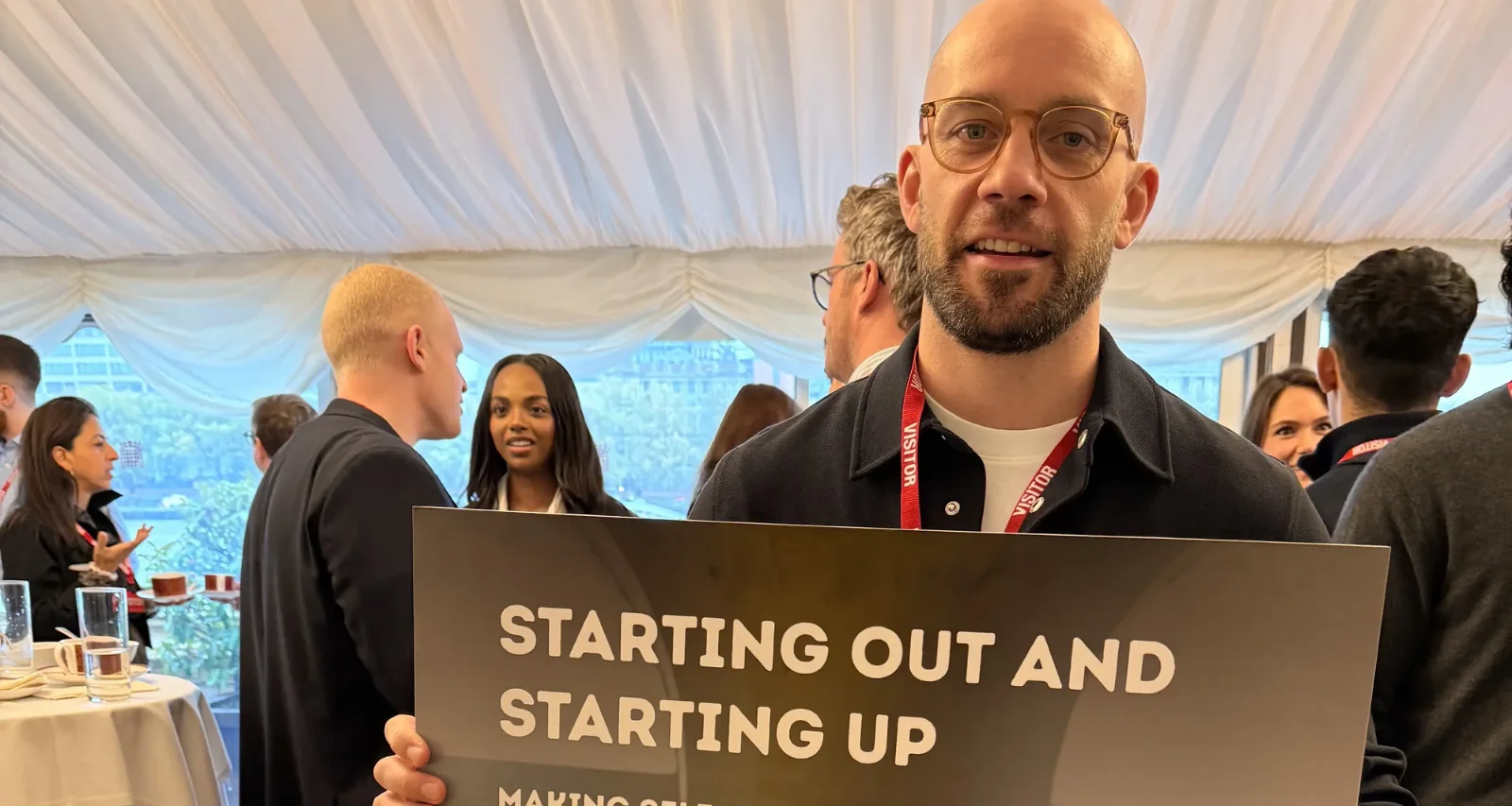
Most of the response so far, Milburn’s included, centres on getting young people hired. In October, ThatRound CEO and founder Bradley Jones was at the House of Lords for the launch of Starting Out and Starting Up, new research from The Entrepreneurs Network (TEN) and Sage, with analysis from the Centre for Economics and Business Research (Cebr). Brad came away inspired by a room full of entrepreneurs looking to build new businesses with AI.
TEN and Sage’s case is that if first jobs are getting harder to find, starting a business should be recognised, and backed, as a proper way into work. But the conversation needs to go further than a business’s first year, because growth is often the harder part.
Fewer first jobs, more young people working for themselves
The employee route has narrowed. Over the three years to 2025/26, the number of employees aged 16 to 24 fell by 129,200 (3.7%), while employee numbers across the whole workforce grew by 1.7%². Hospitality and admin and support roles, where many people get their first job, account for 56% of the payroll jobs young people have lost, according to Sage’s payroll data². Vacancies are at their lowest level since 2014, outside the pandemic³.
Self-employment has moved the other way. Around 193,000 people aged 16 to 24 now work for themselves, close to a ten-year high, and the self-employed share of young workers has risen from 4.5% to 5.4% in three years².
Some are being pushed by a lack of entry-level jobs, others pulled by an idea. Either way, it takes far less to get going than it used to. With a laptop and a few AI tools, a young founder can build a website, write a business plan, run ads and keep the books without paying for help.
Support is still built for one route
Government help for young people out of work is almost entirely about getting them hired by someone else. Employers can claim a £3,000 Youth Jobs Grant for taking on a young person⁶. There’s no equivalent for a young person building their own business, and the New Enterprise Allowance, which helped around 157,000 people become self-employed, wound down at the end of 2021².
TEN and Sage want that to change, calling for a mentoring-led Startup Allowance pilot for under-25s, a £3,000 Youth Enterprise Grant to match the Youth Jobs Grant, and a youth strand of Help to Grow focused on AI².
The Autumn Budget went part of the way. The government will pilot a Young Entrepreneurs Allowance in England to help with living costs in a business’s first year⁷, though eligibility, value and timing haven’t been published yet⁸. The tax-free Trading Allowance will also triple to £3,000 from April 2027⁸. There was nothing on a Youth Enterprise Grant or a youth strand of Help to Grow.
Business is stepping in too. On 16 November, NatWest and Small Business Britain launched Launchpad, a six-week course with one-to-one mentoring for 1,000 young people aged 18 to 25 across the UK, prioritising those who are NEET⁹. As Adeel Hyder, Managing Director of Business Banking at NatWest, put it: “Young people not in education, employment or training need more routes to put their ideas and ambition into practice.”⁹
Not the answer for everyone
None of this means self-employment is right for every young person, and the report is careful to say so.
As Sage CEO Steve Hare writes in the foreword: “Entrepreneurship will not be the right path for everyone. But for a growing number of young people, it is becoming an increasingly attractive and accessible route into work.”²
ThatRound shares that view. Self-employment should widen young people’s options, not replace jobs with employers. Without adequate support, pushing young people into it would only move the problem elsewhere. Even the report’s headline economic figure, that moving one in 20 NEET young people into self-employment over 2027 to 2029 could add about £4 billion by 2029, is a gross estimate rather than a forecast².
Getting started is only the first step
All of this is welcome. But almost every measure on the table, public or private, is aimed at the very first step: testing an idea, covering living costs, learning the basics.
AI has made starting a business cheaper. It hasn’t changed who gets access to what comes next. Advice, networks and investment still tend to reach the founders who already know where to look, and a young founder without industry contacts is less likely to know where that is.
That matters beyond the individual founder. Some of today’s solo businesses will grow into employers, and a few into high-growth companies that need investment.
Youth enterprise sits at the very start of the founder pipeline, which gives investors a direct stake in how well it’s supported. The routes to the right investors shouldn’t only open for founders who were already connected.
What young founders need next
With the government still to respond to Milburn, and the Young Entrepreneurs Allowance pilot still to be designed, there’s a window to get this right. Mentoring and help with living costs get a young founder started. A clear path to the right support helps the strongest of those businesses grow.
A founder’s age, background or contacts shouldn’t decide whether they get in front of investors who back businesses at their stage and in their sector. That’s the gap ThatRound exists to close.
Policymakers have spent years building ladders into employment. The question now is whether they’ll build one for the young people who’d rather make their own job, and make sure it reaches all the way up.
References
- Young people not in education, employment or training (NEET), UK: August 2026 | Office for National Statistics — https://www.ons.gov.uk/employmentandlabourmarket/peoplenotinwork/unemployment/bulletins/youngpeoplenotineducationemploymentortrainingneet/august2026
- Starting Out and Starting Up: Making self-employment a route into work for young people | The Entrepreneurs Network and Sage (research by Cebr), October 2026 — https://www.tenentrepreneurs.org/starting-out-and-starting-up
- Labour market overview, UK: November 2026 | Office for National Statistics — https://www.ons.gov.uk/employmentandlabourmarket/peopleinwork/employmentandemployeetypes/bulletins/uklabourmarket/november2026
- From a Welfare State to a Working State: a new settlement for the next generation | Department for Work and Pensions (independent report by Alan Milburn), November 2026 — https://www.gov.uk/government/publications/from-a-welfare-state-to-a-working-state-a-new-settlement-for-the-next-generation
- Milburn Review: What’s in the plan to help NEETs into work | Big Issue, November 2026 — https://www.bigissue.com/news/employment/milburn-review-youth-unemployment-neets-report/
- Youth Jobs Grant: grant guidance | Department for Work and Pensions, 2026 — https://www.gov.uk/government/publications/youth-jobs-grant/youth-jobs-grant-grant-guidance
- Entrepreneurship in the UK: Start. Scale. Stay. | HM Treasury, October 2026 — https://assets.publishing.service.gov.uk/media/6ae22b55c591dbfc31fb6796/Entrepreneurship_in_the_UK_Budget_2026_Prospectus.pdf
- A deeper dive into the Budget | The Entrepreneurs Network, October 2026 — https://www.tenentrepreneurs.org/blog/a-deeper-dive-into-the-budget
- NatWest and Small Business Britain join forces to launch new route into entrepreneurship for 1,000 young people | NatWest Group, November 2026 — https://www.natwestgroup.com/news-and-insights/news-room/press-releases/2026/natwest-and-small-business-britain-join-forces-to-launch-new-rou.html